

Dry Macular Degeneration: What It Means for Your Vision Over Time
Dry macular degeneration is a frequently seen eye condition that commonly develops in older adults. It is a form of age-related macular degeneration that develops slowly and can quietly influence how you see the world. While it may not cause immediate blindness, it can affect central vision in subtle yet meaningful ways.
Understanding dry AMD and how it differs from wet macular degeneration, and what happens as the disease progresses, can help you feel more informed and prepared.
What Is Happening Inside the Eye?
Located at the back of the eye, the retina is a thin and sensitive layer of tissue that detects light and transmits visual information to the brain. In the centre of the retina lies the macula. This small but powerful area allows you to read, drive, recognise faces, and see fine detail clearly.
In dry age-related macular degeneration, gradual changes occur in the retinal pigment epithelium and surrounding retinal cells. Over time, these cells become less efficient. Waste products accumulate, and the blood supply that nourishes the macula may weaken. This can lead to retinal damage and a gradual loss of sharp central vision.
Unlike wet macular degeneration, the dry form does not initially involve abnormal blood vessels. However, in some cases, abnormal blood vessels grow later, converting dry AMD into wet AMD, which is considered the most aggressive form of macular degeneration.
The Three Stages of Dry AMD
Dry macular degeneration typically develops in three stages. Not everyone progresses through all three stages, but understanding them helps explain how vision changes over time.
Early Stages: Subtle and Often Silent
In the early stages, small deposits form under the retina. These changes are often detected during a comprehensive eye examination before noticeable vision changes occur. Many people have dry macular with no obvious symptoms at this point.
Intermediate AMD: Changes Become Noticeable
Intermediate AMD may bring mild blurring or difficulty adjusting to dim light. Some people notice that straight lines appear slightly wavy or distorted. An Amsler grid can help detect distorted lines at home.
Reading may require brighter light. You might find it harder to recognise faces from a distance. Often, only one eye is affected at first, which can make symptoms less obvious because the other eye compensates.
Late Stage AMD: Geographic Atrophy and Vision Loss
In late-stage AMD, larger areas of retinal cells deteriorate. This is known as geographic atrophy. As the macula thins, central vision loss becomes more pronounced.
You may notice a dark or blank patch in the centre of your vision. While peripheral vision usually remains intact, daily tasks that rely on sharp detail can become challenging. If left untreated and unmonitored, some individuals may also develop wet AMD, where abnormal blood vessels grow beneath the retina.
How Is Macular Degeneration Diagnosed?
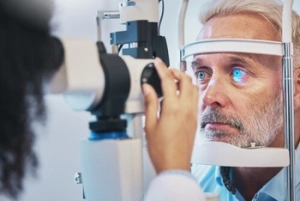 Macular degeneration diagnosed early allows for better monitoring and planning. As part of a comprehensive eye examination, your eye specialist will thoroughly assess the health and structure of your retina.
Imaging tests such as optical coherence tomography provide detailed cross-sectional images of the retina. These OCT scans help detect thinning, fluid, or structural changes. In certain situations, fluorescein angiography may be used to assess blood vessels and identify whether abnormal blood vessels are present.
Regular follow-up appointments are essential. If you notice a sudden change in vision, increased distorted lines, or new blind spots, seek urgent assessment. A sudden change may signal wet macular degeneration, which requires prompt treatment.
Dry vs Wet: Why the Difference Matters
Dry macular degeneration is the more common type and generally progresses slowly. Wet macular degeneration, often called wet AMD, develops when abnormal blood vessels form underneath the macula. These fragile blood vessels can leak fluid or blood, causing rapid vision loss.
Wet AMD is considered the aggressive form because vision can decline quickly. Early recognition is vital. Treatment options for wet AMD may include injections or, in some cases, photodynamic therapy to target abnormal blood vessels that grow beneath the retina.
Dry AMD does not have the same immediate treatment pathway, but monitoring remains crucial because the condition can shift from dry form to wet.
Risk Factors and Who Is More Likely to Develop It
Dry macular degeneration is one of the primary causes of reduced central vision in older adults. Factors that increase the likelihood of developing it include advancing age, smoking, elevated blood pressure, and a family history of the condition. If a close family member has macular degeneration, your risk of experiencing it may also be increased.
Other health factors that affect blood supply and overall eye health may also play a role. Maintaining general health supports the retina and may slow progression.
Living with Dry Macular Degeneration
Hearing that you have dry macular can feel overwhelming. However, not everyone experiences severe vision loss. Many people live full and independent lives, especially when the condition is identified in the early stages.
Lifestyle changes can make a meaningful difference. These may include quitting smoking, maintaining a balanced diet rich in leafy greens, managing blood pressure, and protecting your eyes from excessive sunlight.
Using tools like an Amsler grid at home helps monitor subtle changes. Good lighting, magnification devices, and digital accessibility settings can improve day-to-day comfort.
When to Seek Professional Care
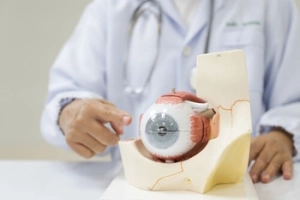 If you have noticed a gradual loss of clarity, distorted lines, difficulty reading, or trouble recognising faces, it is important not to ignore these changes. Any sudden shift in vision, particularly in one eye, should be assessed promptly.
Dry macular degeneration may not usually cause total blindness, as peripheral vision often remains intact, but changes to central vision can significantly affect daily life. Early detection through regular comprehensive eye examination and advanced imaging, such as optical coherence tomography, allows for careful monitoring and timely management.
If you are experiencing vision changes or would like reassurance about your eye health, contact Mornington Peninsula Eye Clinic on (03) 9070 3580 to arrange a thorough assessment with our experienced eye specialist. Proactive care can make a meaningful difference in protecting your vision for the years ahead.
Note: Any surgical or invasive procedure carries risks. Before proceeding, you should seek a second opinion from an appropriately qualified health practitioner.
References
Mayo Clinic. (n.d.). Dry macular degeneration: Symptoms and causes. Retrieved from https://www.mayoclinic.org/diseases-conditions/dry-macular-degeneration/symptoms-causes/syc-20350375
ScienceDirect. (n.d.). [Title of article from ScienceDirect]. Retrieved from https://www.sciencedirect.com/science/article/pii/S1350946217300563
Cleveland Clinic. (n.d.). Macular degeneration: Symptoms, diagnosis & treatment. Retrieved from https://my.clevelandclinic.org/health/body/23185-macula


Leave a Reply
Want to join the discussion?Feel free to contribute!