

Is Glaucoma Hereditary? Unmasking the Enigma
“Is glaucoma hereditary?” — a question frequently posed yet shrouded in mystery. Glaucoma, an eye disease that impairs the optic nerve and may culminate in vision loss, emerges in various forms. Predominantly, it appears as primary open-angle glaucoma. Other manifestations, however, include angle closure glaucoma, primary congenital glaucoma, and normal tension glaucoma.
The Risk of Developing Glaucoma: Genes are Just Part of the Picture
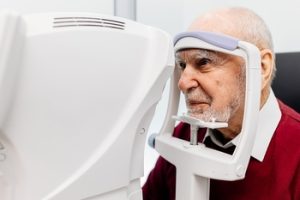 Considering that genetics and a family history of glaucoma are significant risk factors in developing that disease. However, other additional elements play a huge role in leading to that disease.
Age, particularly if you’re over 60, presents an increased risk.
Other risk factors, such as abnormally elevated eye pressure, also known as intraocular pressure (IOP), often due to malfunctions in the eye’s drainage system, amplifies your risk of developing glaucoma, as do certain medical conditions like diabetes, heart disease, and hypertension.
Glaucoma Symptoms: The Silent Thief of Sight
Glaucoma’s insidious nature often masks its early signs, underscoring the critical importance of regular eye examinations. The vision loss from glaucoma, primarily impacting peripheral vision initially, is gradual.
Due to this stealthy progression, glaucoma is called the “silent thief of sight.” However, its development can be halted through early detection and timely intervention during comprehensive eye examinations.
Delving into Glaucoma’s Major Forms
Primary Open-Angle Glaucoma
The most frequently encountered form of the disease is Primary Open-Angle Glaucoma (POAG). As the terminology implies, this type is characterised by a seemingly normal, open angle between the iris and the cornea. Nonetheless, over time, the eye’s drainage system, crucial for fluid outflow — becomes less effective, progressively escalating intraocular pressure.
Though POAG typically displays no symptoms in the early stages, regular eye exams are essential for its early detection and treatment, often initiated with prescription eye drops.
Primary Angle-Closure Glaucoma
Conversely, Primary Angle-Closure Glaucoma (PACG) is typified by an abrupt blockage of the drainage angle formed by the iris and cornea. This sudden obstruction can trigger swift rises in eye pressure, producing acute symptoms such as eye pain, headaches, blurred vision, and halos around lights.
Although less common than POAG, PACG necessitates immediate medical attention to forestall permanent vision loss. Treatment might entail laser therapy to create an alternative drainage path, thus alleviating the pressure.
 Primary Congenital Glaucoma
 Primary Congenital Glaucoma
 (PCG) is a rare genetic form of glaucoma prevalent in infants and young children. Born from an incorrect development of the eye’s drainage system prior to birth, PCG can trigger symptoms like light sensitivity, excessive tearing, or eye cloudiness.
Swift detection is pivotal, with surgery often proving successful in rectifying the drainage channel, reducing eye pressure, and preventing further vision loss.
Early-Onset Glaucoma
Early-Onset Glaucoma, also referred to as Juvenile Glaucoma emerges in individuals from early childhood through early adulthood. This specific variant of glaucoma frequently has a hereditary link, and its symptoms may remain inconspicuous until the unfortunate occurrence of vision loss.
While medications may be employed to decrease eye pressure, surgery is frequently required to control this type of glaucoma.
Exfoliation Glaucoma
Exfoliation Glaucoma is a secondary form of open-angle glaucoma. It occurs when a flaky, dandruff-like material peels off the eye’s outer layer, blocking the drainage system and escalating eye pressure.
This form of glaucoma is typically managed with medications or surgery to control eye pressure. Regular eye exams can aid in detecting the exfoliation syndrome before it progresses to glaucoma.
To conclude, although glaucoma appears in numerous forms, each poses a significant threat to vision. Regular eye examinations enable early detection and more effective treatment, underscoring the importance of proactive eye health management.
From Risk to Reality: Symptoms and Treatments
The symptoms of glaucoma, particularly in its early stages, can be elusive. Over time, however, one may notice blind spots in their peripheral vision, eye pain, blurred vision, or halos around lights.
To treat glaucoma, your eye doctor may prescribe eye drops to mitigate the pressure. Other treatments encompass oral medications, laser surgery, or conventional surgery, contingent on the severity and type of glaucoma.
Final Reflections: It’s More Than Just a Family Affair
So, the question, “Is glaucoma hereditary?” prompts a nuanced answer. While the familial history of glaucoma certainly heightens the likelihood of disease onset, it is critical to recognise the role of additional risk factors.
Consistent eye examinations are integral for early detection and intervention, paving the way for improved prognoses, regardless of your genetic heritage. Glaucoma may not be limited to inheritance but is a pressing health concern that warrants our due consideration.
Like the variations in sentence lengths and complexities within a well-written article, the many facets of our eye health are equally diverse. This reinforces the importance of regular comprehensive eye examinations and awareness of potential risk factors. A small sacrifice to safeguard our precious vision indeed.
Give us a call on (03) 9070 3580 today for your consultation.
Note: Any surgical or invasive procedure carries risks. Before proceeding, you should seek a second opinion from an appropriately qualified health practitioner.
Sources
Glaucoma Treatment
https://www.nhs.uk/conditions/glaucoma/treatments/#:~:text=There%20are%20several%20different%20treatments,your%20vision%20getting%20any%20worse.
Glaucoma
https://glaucoma.org/are-you-at-risk-for-glaucoma/
Glaucoma: Family Inheritance?
https://glaucoma.org/glaucoma-family-inheritance/?print=print
Do genetic factors influence glaucoma?
https://www.medicalnewstoday.com/articles/is-glaucoma-hereditary










Leave a Reply
Want to join the discussion?Feel free to contribute!