

Phakic Intraocular Lens Implants: Types, Process, & Recovery
If you’re exploring options to improve your vision or preparing for cataract surgery, you’ve likely come across the term intraocular lens. These advanced lenses have revolutionised modern eye care, enabling thousands to achieve clearer, sharper vision, often with reduced dependency on glasses or contacts.
In this comprehensive guide, you’ll learn everything you need to know about intraocular lenses: what they are, how they work, the types available, and what to expect if you’re considering lens replacement or refractive surgery.
Whether you’re dealing with refractive error, preexisting astigmatism, or exploring options for better distance vision, this article is here to guide you.
 Understanding Intraocular Lenses (IOLs)
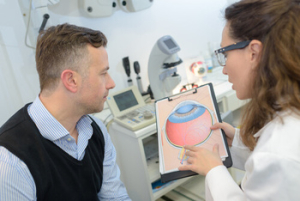 Understanding Intraocular Lenses (IOLs)
An intraocular lens (IOL) is a tiny, artificial lens implanted in your eye to replace your eye’s natural lens. Most commonly, IOLs are used during cataract surgery, a surgical procedure where a cloudy lens is replaced with a clear, synthetic one.
But IOLs can also be used in refractive lens exchange (RLE), which aims to correct refractive errors caused by issues like astigmatism, myopia, or hyperopia by enhancing how light rays are focused within the eye.
Types Of IOLs
There are several types of IOL lenses, each designed to address different visual needs. Your professional eye doctor will help you choose the most suitable option depending on your lifestyle and goals.
Monofocal Lenses
These are the most common type of IOL and are designed for one focusing distance, usually clear distance vision. You’ll likely still need reading glasses for close-up work.
Multifocal Lenses
Unlike monofocal lenses, multifocal lenses offer multiple focusing zones for both distance and near vision. They aim to reduce the need for glasses or contact lenses, although some people might still prefer glasses for specific tasks.
Accommodative Lenses
These lenses shift slightly with your natural eye movements, mimicking the function of the natural lens. They may improve focus at multiple distances, especially intermediate vision, and can help reduce reliance on reading glasses.
The Intraocular Lens Implantation Process
Wondering what the journey to clearer vision looks like? Here’s an overview of what you can expect during the IOL implantation process, from your first appointment to post-surgery care.
Step 1: Initial Consultation
Your journey begins with a thorough eye assessment. During this visit, your eye surgeon will evaluate your focusing power, check your corneal shape, and examine your overall eye health. Advanced measurements are taken to determine the appropriate strength and type of IOL implant best suited to your visual goals and anatomy.
Step 2: Surgical Procedure
 Step 2: Surgical Procedure
On the day of your lens surgery, you’ll be made comfortable with medicated eye drops to numb the eye. The surgeon will make a tiny incision, carefully remove the clouded natural lens, and insert the folded intraocular lens through the same opening. Once inside the lens capsule, the implanted lens gently unfolds and is positioned securely.
The entire procedure usually takes only a short time and is performed with precision using advanced microsurgical techniques.
Step 3: Post-Surgery Aftercare
You’ll be given medicated eye drops to help reduce inflammation and minimise the risk of infection.
It’s important to attend your scheduled follow-up visits, where your eye doctor will monitor healing and confirm that the IOL implant remains well-positioned.
During this period, avoid strenuous activity, rubbing your eyes or exposing them to dust or water as directed. Your eye care team will guide you every step of the way to support your comfort and visual recovery.
What To Expect After Intraocular Lens Surgery
Knowing what to expect after your intraocular lens implant can help you feel more at ease and better prepared for the journey ahead. Here’s what recovery typically looks like and what you may notice along the way.
Clearer Vision
Most people report clear distance vision after IOL surgery. Depending on the type of IOL you’ve chosen, you may still need reading glasses or wear eyeglasses occasionally.
Quick Recovery
Many return to daily activities in just a few days, though it’s important to avoid heavy lifting or rubbing your eyes during the initial recovery.
Some Possible Side Effects
While most people recover well with no significant issues, some may notice mild and temporary visual symptoms as the eyes adjust. These might include:
- Posterior Capsular Opacification: A common and treatable clouding that can occur on the lens capsule months or years after surgery.
- Retinal Detachment: A rare complication, more commonly associated with high myopia (severe short-sightedness).
- Glare Or Halos: Often reported during night-time driving, especially with multifocal IOLs.
Your eye surgeon will discuss any more serious risks during your consultation and provide personalised advice based on your eye health and history.
Frequently Asked Questions
Can intraocular lenses correct astigmatism?
Yes, certain types of intraocular lenses, known as toric lenses, are specifically designed to correct astigmatism. Astigmatism is often caused by an uneven curve in the cornea, which can distort vision.
Toric IOLs help compensate for this irregularity, improving clarity and reducing the need for glasses or contact lenses after surgery.
Is the procedure painful?
Most people find it very manageable. Medicated eye drops numb the area, and you may receive a mild sedative to keep you comfortable.
Is the same lens used in both eyes?
Not always. Your eye doctor may recommend different lenses in each eye depending on your vision needs. Sometimes, the same lens type is used in both eyes for balance and consistency.
Conclusion
 Choosing an intraocular lens opens up exciting possibilities for restoring your vision. Whether you need cataract surgery or are considering a refractive lens exchange, the variety of IOLs available today means there’s likely an option that aligns with your goals.
As with any surgical procedure, a personalised consultation with an eye care professional is essential. They’ll help guide your choices, explain the benefits and considerations, and support your journey towards a clear vision and improved eye health.
Want to learn more about your options or schedule a consultation with a friendly eye care team in Melbourne?
Reach out to Mornington Peninsula Eye Clinic today at (03) 9070 3580 and take your first step towards a clearer vision and a more confident future without making any compromises on safety or personal care.
Note: Any surgical or invasive procedure carries risks. Before proceeding, you should seek a second opinion from an appropriately qualified health practitioner.
Sources
Rowden A. What Are Phakic Intraocular Lenses? [Internet]. Medical News Today. 2025 [cited 2025 Jun 20]. Available from: https://www.medicalnewstoday.com/articles/phakic-intraocular-lens
Rung R. Choosing the Right Cataract Lens Option for Surgery [Internet]. Healthline. 2024 [cited 2025 Jun 20]. Available from: https://www.healthline.com/health/cataract-lens-options
Lipner M. Pseudophakia to Treat Cataracts [Internet]. Verywell Health. 2025 [cited 2025 Jun 20]. Available from: https://www.verywellhealth.com/pseudophakia-5116181


Leave a Reply
Want to join the discussion?Feel free to contribute!